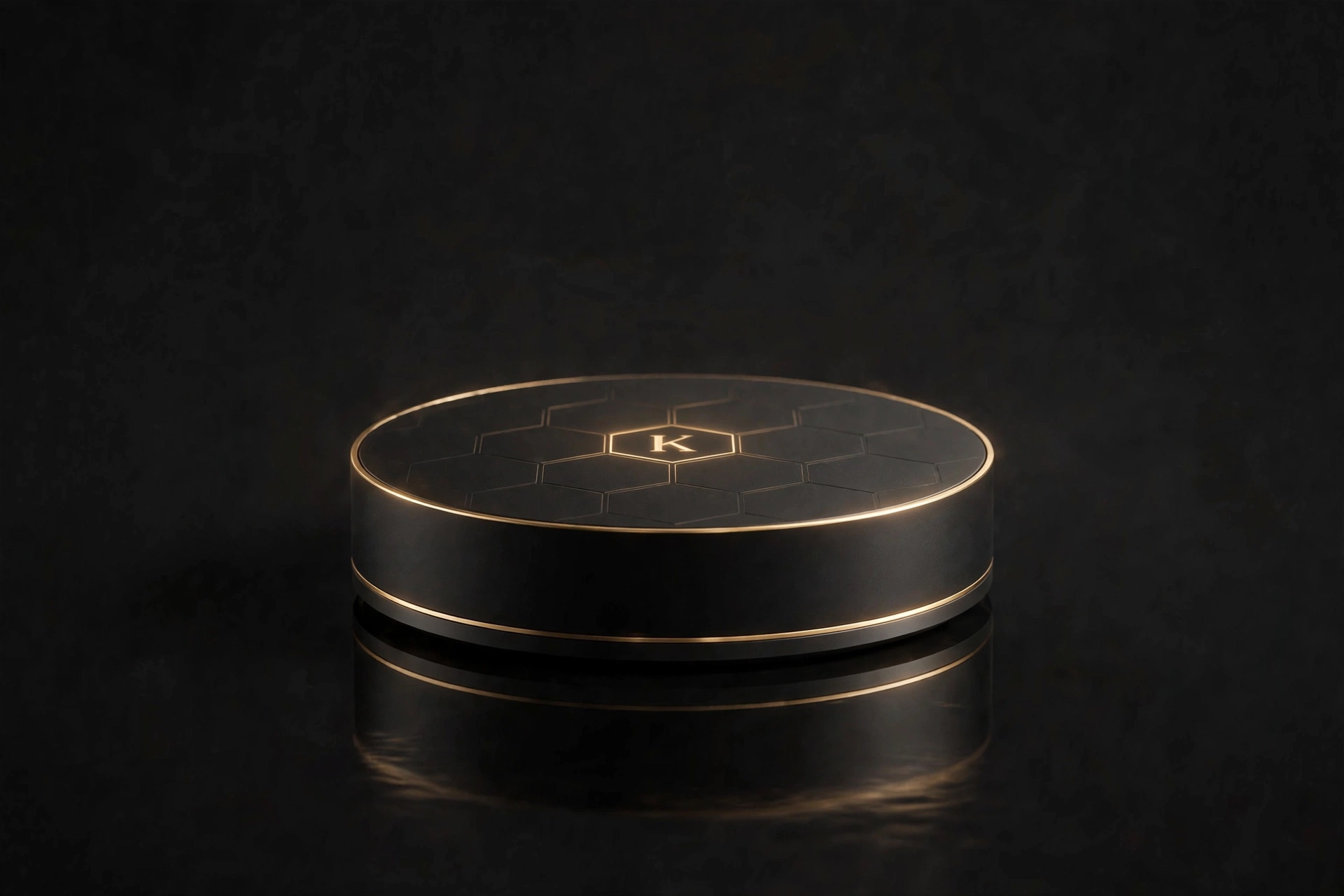
V0.1 · Building now
Root
The foundation hub of KORE ROOT. Root sits at the center of a space, coordinates the Seeds around it, keeps the local record, and raises the alert. V0.1 starts here.
A leak runs for days before anyone sees it. A machine drifts for weeks before it fails. Kore ends the guessing: a sensing system that watches a space continuously and turns what happens there into a baseline, a record, and an alert.
Kore is an ultra-surveillance sensing system, cameras included, built for unmatched safety and documentation: KORE ROOT hubs and KORE SEEDS modular sensors sensing air, water, motion, sound, vibration, and presence, reporting around the clock. Camera-free sensing configurations are available as an option for schools, churches, senior living, and similar settings. The first build, V0.1, is Root plus Seed Sense and Seed Air, the first step of a 10-year architecture.
Investor briefings, pilot invitations, and prototype drops. The list hears everything first.
This is the Sleek Line: matte near-black forms, hairline teal-to-gold linework, hexagonal geometry, radiating signal arcs. Every card carries its real status, from parts in hand on the bench to designs finished and ready for their manufacturers.
The foundation hub of KORE ROOT. Root sits at the center of a space, coordinates the Seeds around it, keeps the local record, and raises the alert. V0.1 starts here.
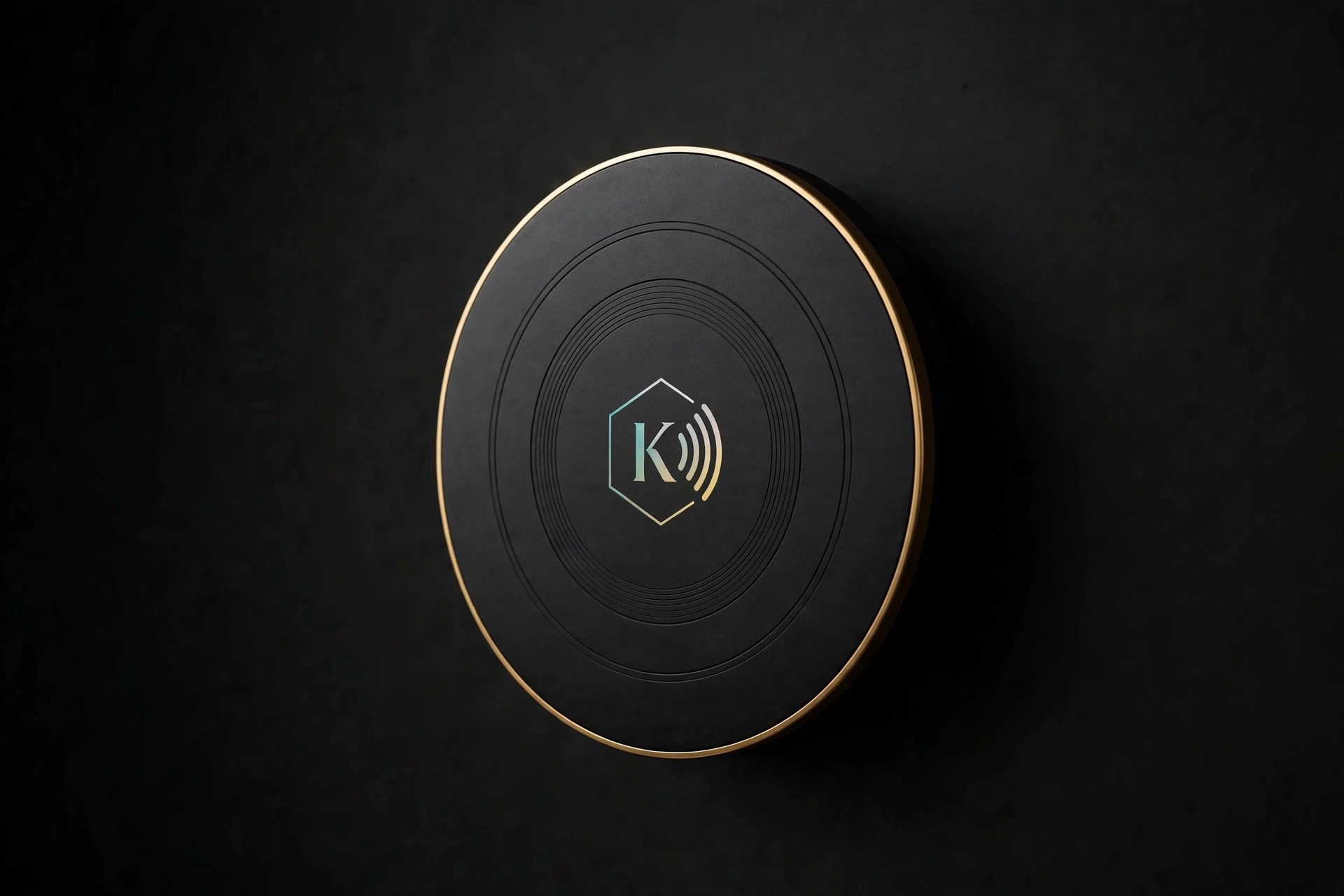
The first KORE SEEDS multi-sense node: the general-purpose sensor that reads the room and reports to Root. Half of the V0.1 sensor pair.
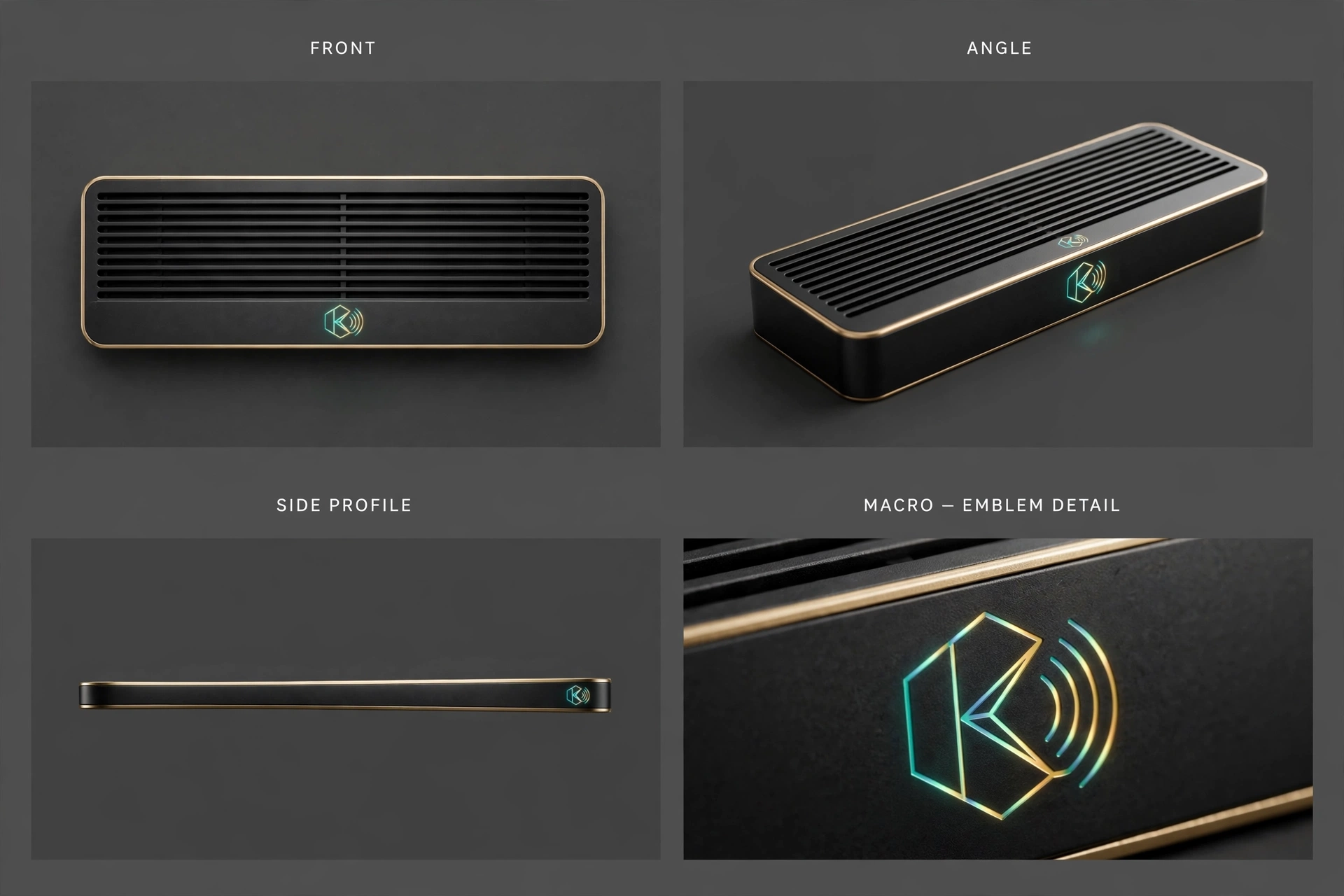
The air specialist of the Seed family: a slim vent-form sensor for the air a space breathes. Shown here as its full design sheet: front, angle, side profile, and emblem detail.
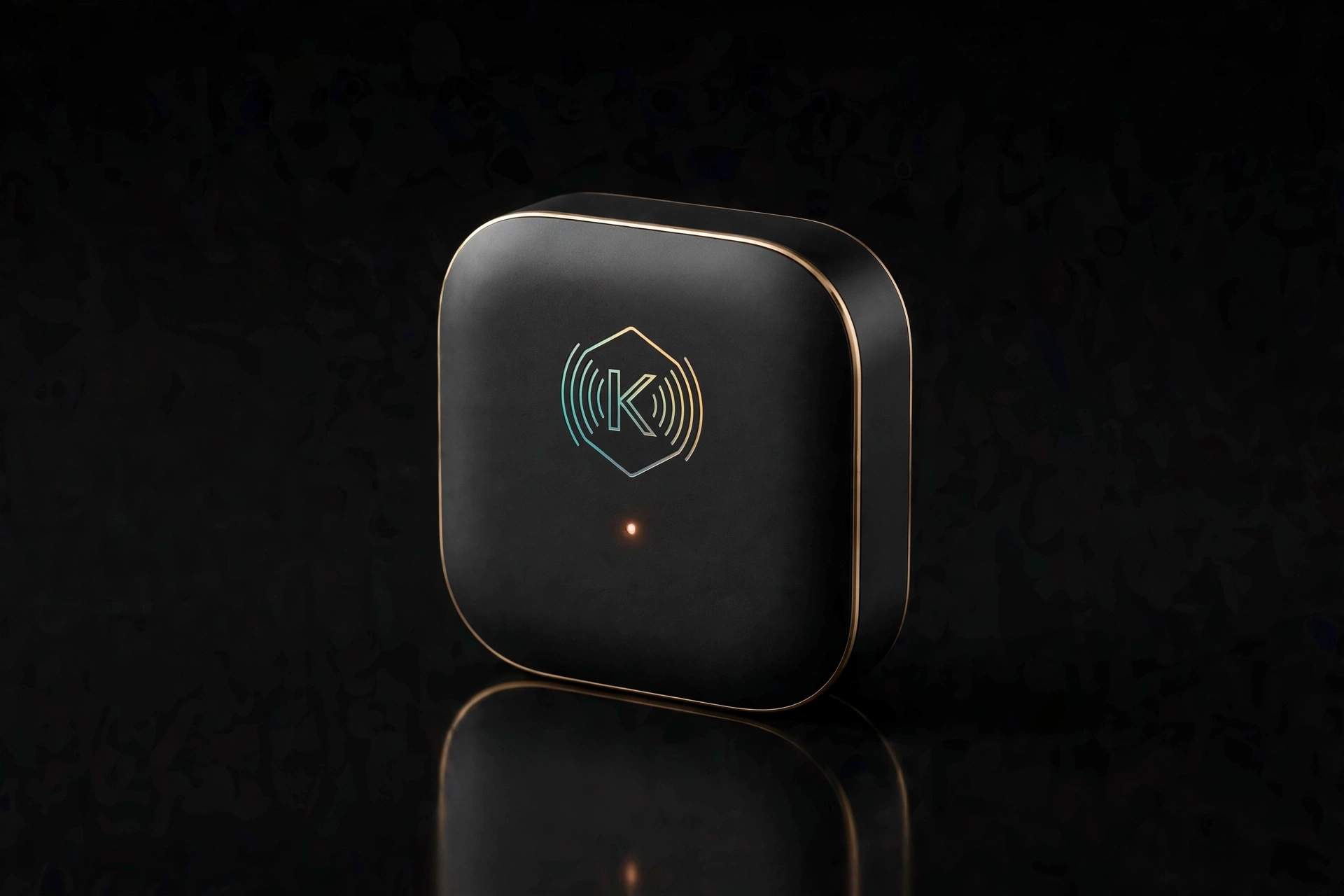
The compact member of the Root family (Root, Root Mini, Root Home, Root Pro): the same record, sized for a single room, an apartment, or a small shop.
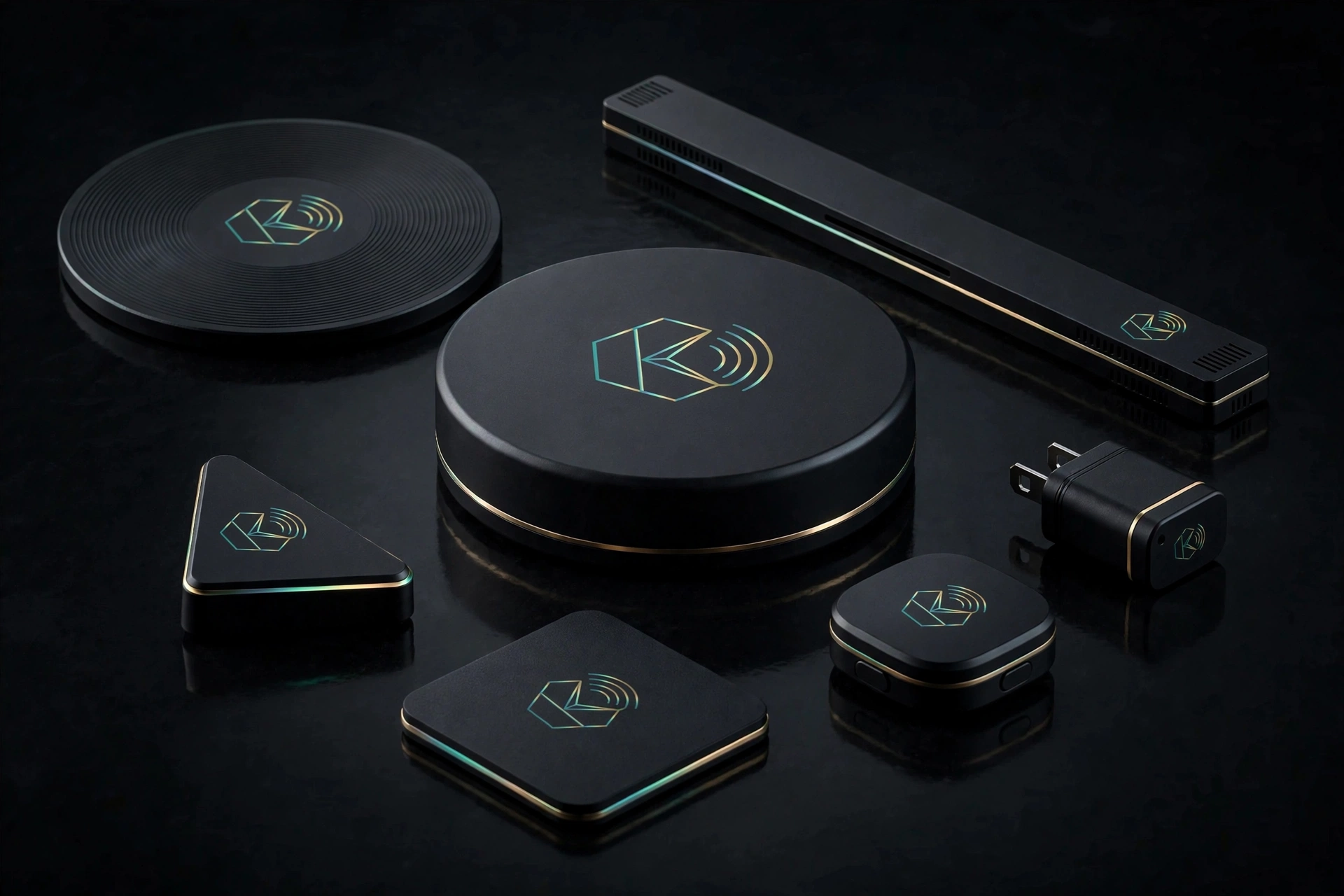
The family as designed: Root hubs in several forms, the Seed Air bar, and Seed nodes for water, motion, sound, presence, contact, and link. One record across all of them.
KORE SEEDS are modular: Seed Sense, Seed Air, Seed Water, Seed Motion, Seed Sound, Seed Presence, Seed Contact, Seed Link. Each Seed is a specialist. Root makes them a system, and the system makes a record. See the full architecture on the system page.
Three buckets, no blurring. If it is in the first column, it is being built now. If it is in the third, it is a design direction for the 10-year architecture, not a product and not a date.
Every layer answers to the one beneath it. Data becomes a baseline. A baseline kept over time becomes a record. A record becomes intelligence. Intelligence becomes response. Full detail on the how it works page.
KORE ROOT hubs and KORE SEEDS modular sensors sense air, water, motion, sound, vibration, presence, temperature, and more, and report continuously, so events that used to happen unwitnessed happen on the record.
For machines, processes, and materials: condition baselines, drift detection, uptime records, and environmental evidence at the boundary of a site. What happened, when, and under what conditions, with the evidence attached.
A private file for each person: sensed rhythms and home conditions, reported as measurement, correlation, and stated confidence. Sharing happens only with explicit opt-in, point by point. It makes no health claims and supplements professional care rather than replacing it.
Kore records are built to be handed to the people who act on them: maintenance teams, safety officers, insurers, contractors, and clinicians a person chooses to share with. Sensing documents and alerts. Professionals decide and act.
Kore is being built in the open, with every figure labeled by its basis and everything unproven marked as such. The full case, budget, and risk register live on the invest page.
Leaks, failures, intrusions, and incidents happen where nobody is watching. Without a record, owners pay for damage, disputes, and downtime they cannot reconstruct after the fact.
Root hubs and Seed sensors keep a time-stamped record of a space: baselines, drift alerts, event documentation, and ultra-surveillance coverage for unmatched safety and documentation.
Manufacturers and business owners first, where one avoided loss can pay for the system. Homes second, where the same record defends claims. The individual third.
V0.1 is specified, its parts are in hand, and the bench build has started. The wider lineup is designed and sourced down to its manufacturers. Results are published here as they land.
A crowdfunding campaign goal on GoFundMe to fund the V0.1 prototype build: assembly, bench testing, and controlled validation, spent in milestone stages.
One verified figure, the rest estimates. The only quoted line is the build itself; every other line is an estimate with its basis stated on the invest page.
The ~$18,000 quote is a written builder quote from Sheldon Hurst, October 2026, awaiting reply; it is not a contract. The remaining $12,000 of the goal covers the lines above that are not yet quoted. The amount raised has not been verified, so no raised figure is shown. Spend is tracked against the build log cost register.
The sense, compare, act, verify, record sequence completes on the bench without manual intervention, and the local record is complete and retrievable.
All six bench tests from the prototype test plan pass their written acceptance criteria. Failures are logged publicly on the build log.
A real-room trial runs under documented conditions for a defined period; the published report includes the pass and fail record and the honest failure log.
All three gates are planned; none has been attempted, because no prototype exists yet. Milestone-based spend: funds unlock work in stages, prototype assembly, then bench testing, then controlled validation.
Savings are losses that stop happening or shrink, modeled from published loss rates. Profit is revenue defended and won because the operation runs with a record. The two are kept separate, and every figure carries its label. The full model is on the impact page.
Blended business site, per year. Restaurants, retail and offices, construction, and industrial blended as in the impact model, plus about 60 hours of logging, rounds, and documentation labor returned per site per year.
Industrial and warehouse site, per year. Drift and downtime avoidance, stated conservatively in the model and kept far below published heavy-plant figures, on purpose.
Infrastructure node, per year. Leak, drift, and downtime avoidance at utility, port, warehouse, and process scale, plus about 1,000 hours of inspection and documentation labor returned.
Average water damage and freezing claim, Insurance Information Institute, 2019 to 2023 data. A leak caught in its first hour is a repair; caught on day five it is a renovation, plus a business interruption claim on top.
Structure fires per year in eating and drinking establishments (NFPA, carried in the impact model), with cooking equipment the leading cause at about 61 percent. Sensing is priced against that published schedule, not against hope.
Kore has no insurer partnership, no carrier agreement, and no discount to promise. Carriers already pay premium credits for monitored homes and sites; Kore will not claim one exists for its customers until a carrier agreement exists.
Investors and partners start a conversation. Pilot partners declare interest in a future controlled trial. Everyone else can follow the build. Each path is separate, and none of them is a purchase.