
Takes in waste materials
Clean plastics, metals, cardboard, e-waste, and textiles. One intake, weighed and logged, so recoverable material stops leaving the home as undocumented trash.
KoreBin · The main product
Keeping Our Roots Enriched, starting at the bin.
KoreBin is the main product of the Kore Vision: a waste-to-ore machine. It takes in everyday waste materials, sorts and processes them, and outputs labeled upcycled ore blocks that become the material for Kore Vision products. It is not about food. It never was going to be: no restaurants, no surplus food, no food donations.
Concept stage · Pre-prototype · Nothing built yet
What KoreBin is · Concept
KoreBin sits at the center of the Kore Vision. It is a proposed machine for homes and small businesses that takes in everyday waste materials and upcycles them into a documented, material-labeled resource: Kore Ore. That ore is the feedstock for what Kore builds next.
Pre-prototype · Concept stage · The machine does not exist yet
Clean plastics, metals, cardboard, e-waste, and textiles. One intake, weighed and logged, so recoverable material stops leaving the home as undocumented trash.
Material is sorted, processed, and compacted into labeled Kore Ore Blocks, stamped by material type. The blocks are the feedstock for upcycled Kore Vision products.
KoreBin is not a food machine. No restaurants, no surplus food, no food donations, no food waste. That direction is retired. KoreBin handles material waste only.
The cycle · Concept
This is upcycling, not upcycling. Material is not downgraded into lesser uses, it is rebuilt into higher ones. Personal Intelligence is the backbone: one neural network linking every point of the cycle to you and your group.
You put trash in the KoreBin. Plastics, metals, cardboard, e-waste, textiles. Weighed and logged.
The KoreBin makes the ore. Sorted, compacted, stamped by material stream: upcycled feedstock.
Keeping material in the loop earns Kore credit. Concept-only, not currency.
The ore goes to KoreForge, the rapid liquid-inject 3D printer. Whole products form in seconds.
Order from the catalog through your Personal Intelligence. Panels become houses, sensor systems, protection.
Concept visualization
Kore Ore Origins: the four waste streams, the KoreBin at work, and the stamped blocks standing in front of the materials they came from. No hardware exists yet; every frame is a visualization, not a recording.
Interactive 3D · Concept
Step through the five stages: safe intake, contained processing, AI organizing, ore creation, and the connections to the catalog and Kore credits. Concept visualization, pre-prototype.
Ore to products · Concept
Kore doesn’t upcycle waste. Kore redesigns what waste can become. Kore Ore Blocks are the feedstock for upcycled, 3D-printable and moldable layers used in Kore Vision product housings: stealth, smooth-finished, and built to lead with eco-friendly materials.
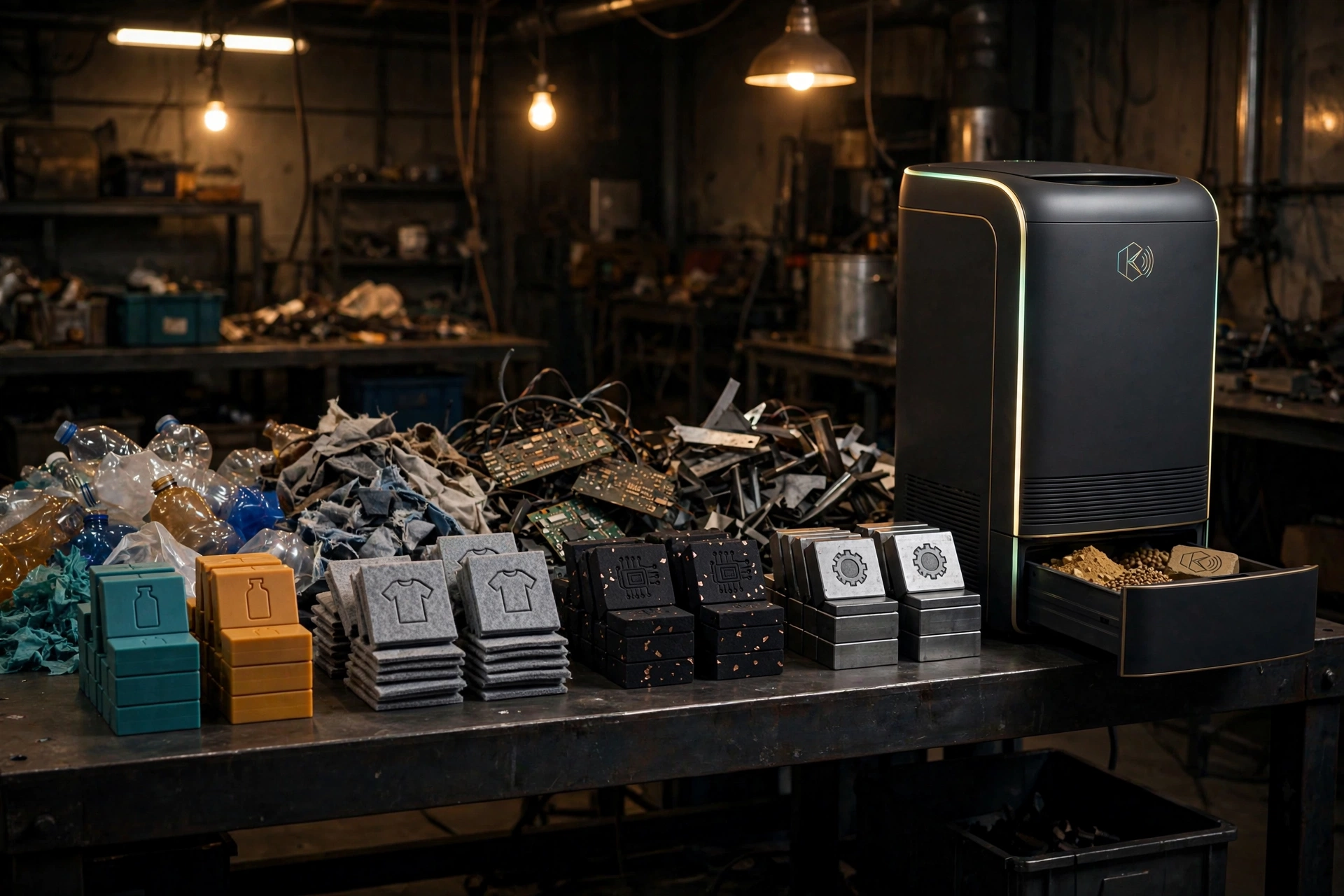
Every block is stamped with its material, so the feedstock going into products is known, not guessed. And every block stands in front of what it used to be.
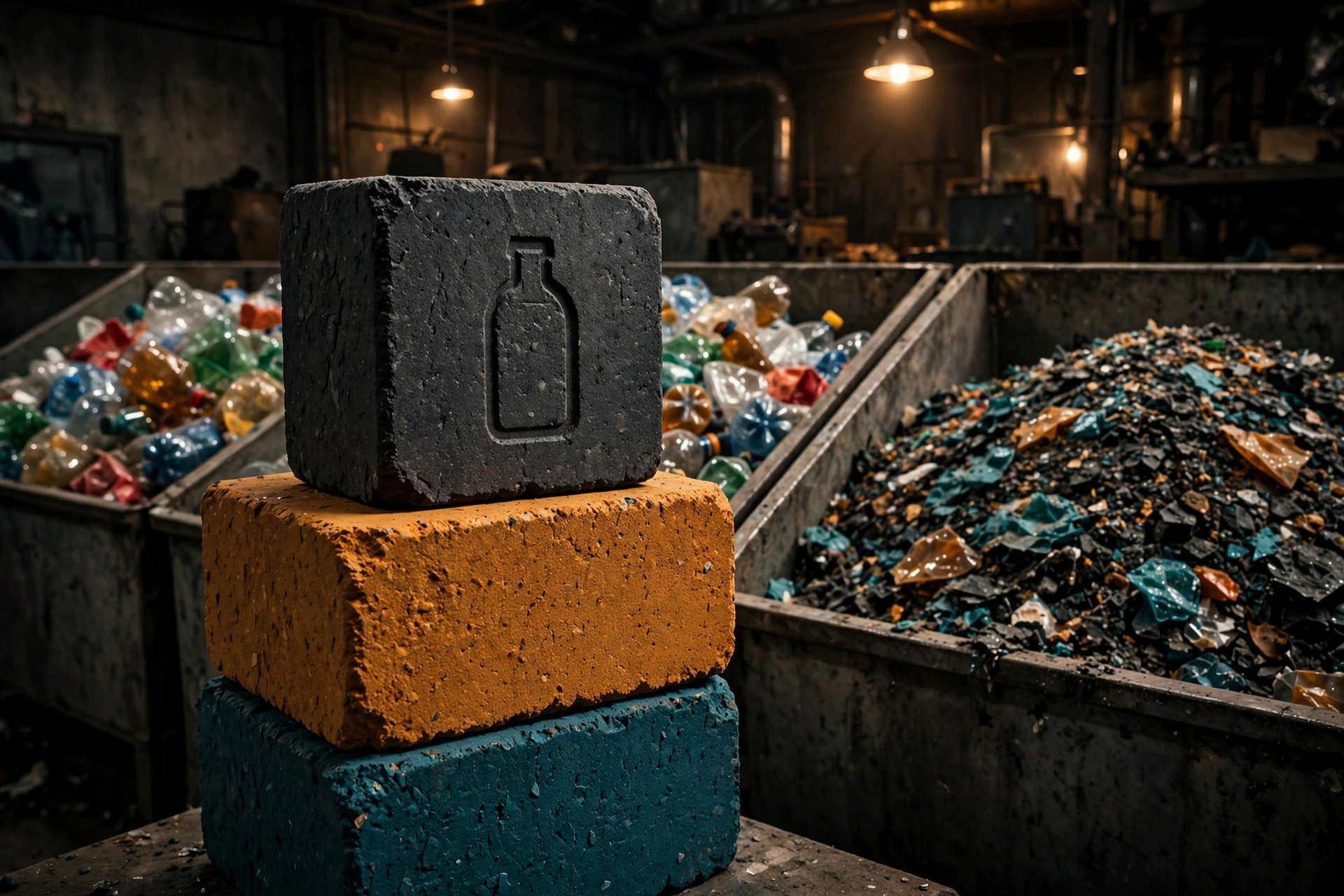
Crushed bottles and regrind, compacted and stamped by type. Becomes the shells, panels, and printed parts Kore products are made from.
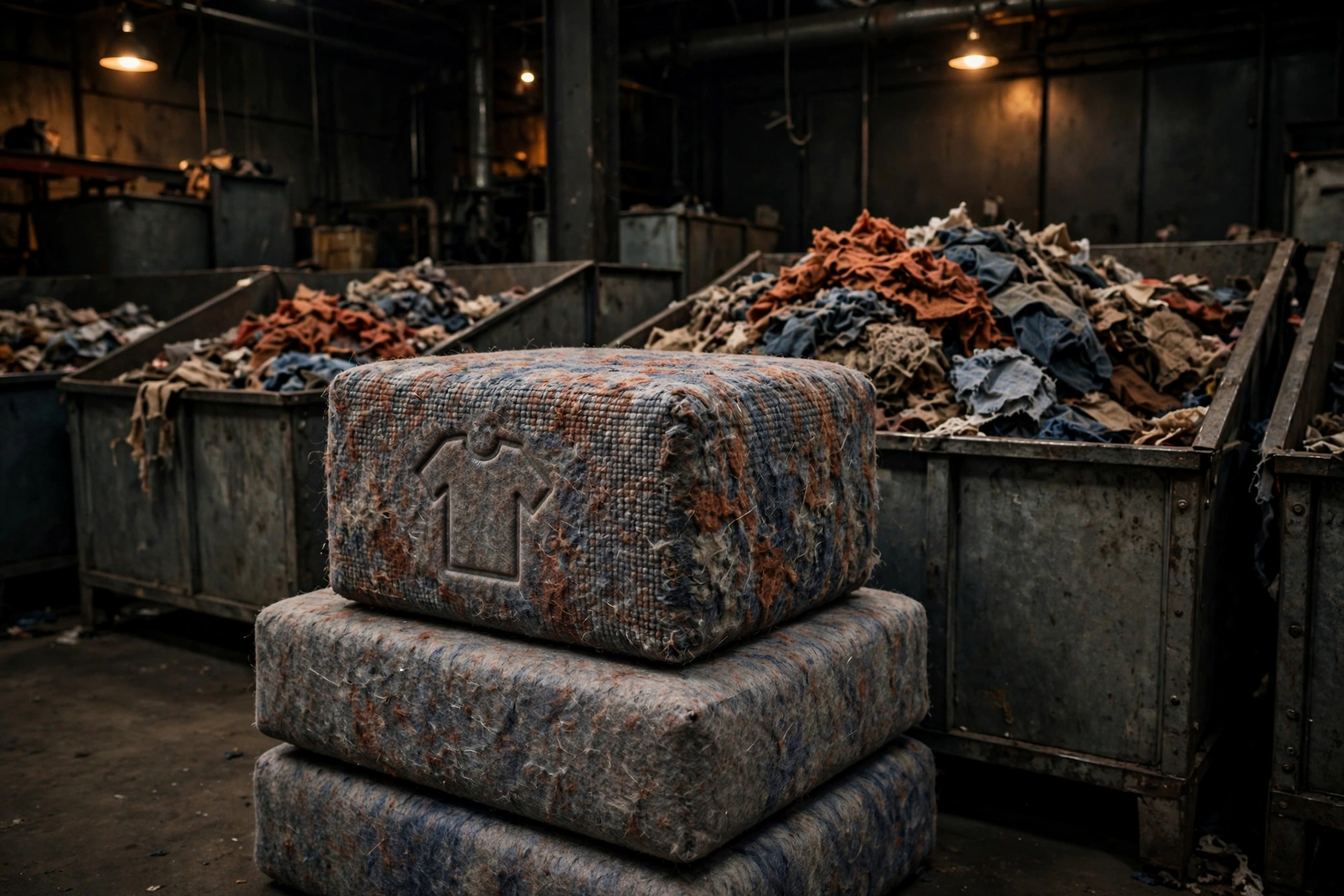
Shredded clothing and fabric waste, felted into dense blocks. Becomes insulation, padding, and soft structural layers.
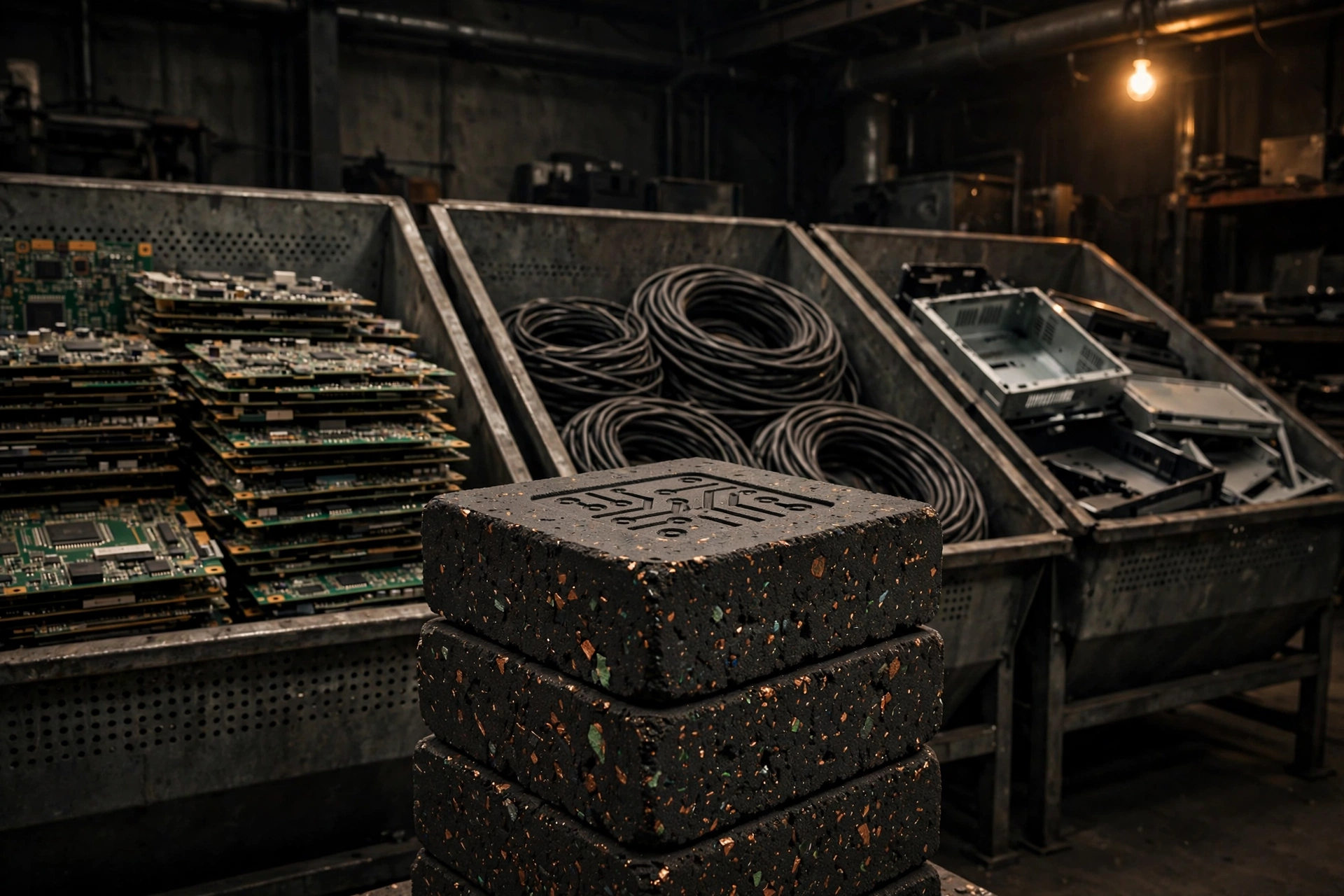
Circuit boards, cables, and device shells, separated and compacted. Becomes recovered feedstock for new housings and components.
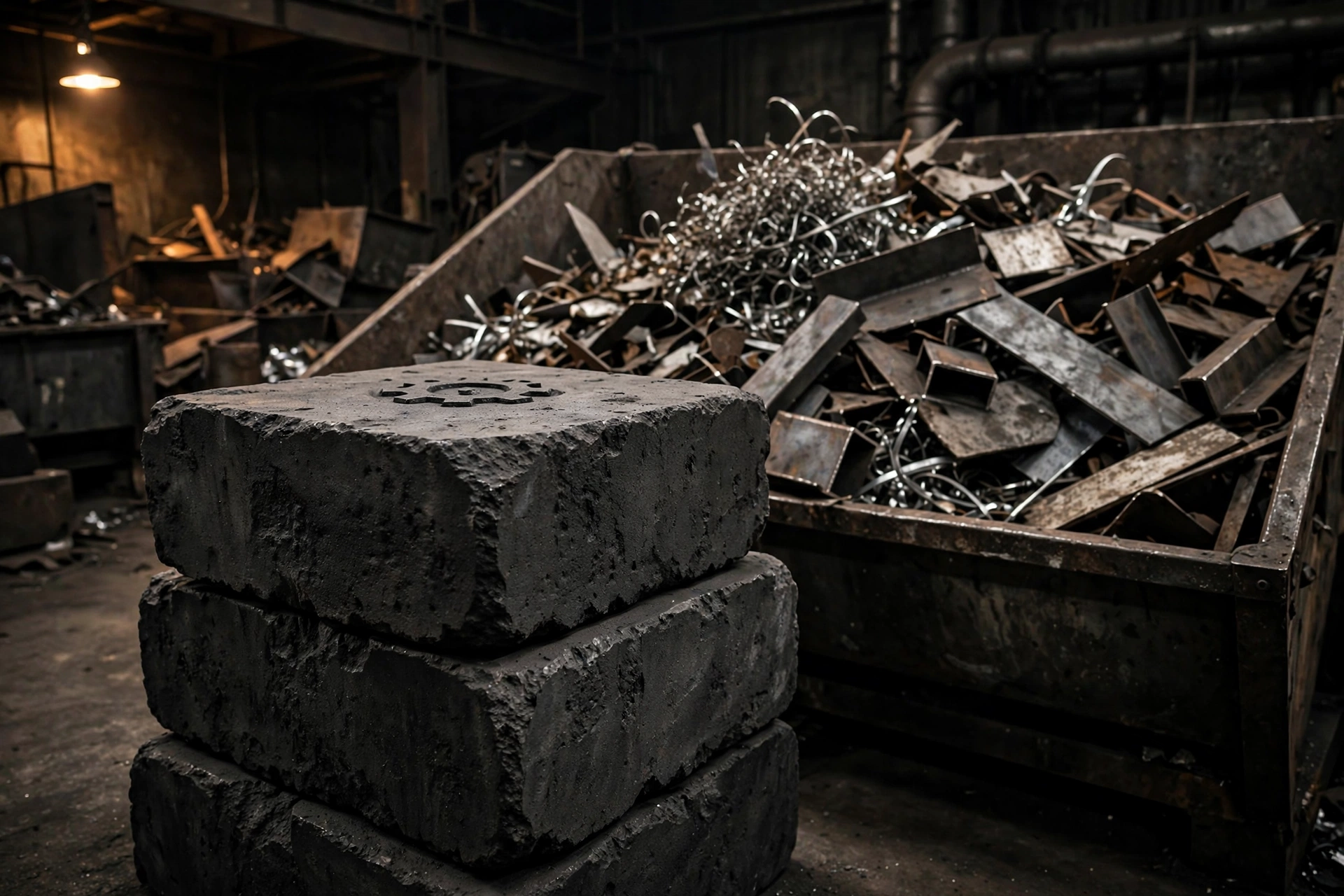
Scrap iron and steel, sorted, graded, and verified by assay before any claim is made. Becomes the metal content in frames, mounts, and hardware.
The closed economy works like this: people save the earth by keeping material in the loop, and the loop rewards them in Kore credit. The ore never leaves the system until it becomes a product.
What the Bin takes
KoreBin intake is organized by material stream, and every stream is labeled and bench-tested before it can become a product. Metal streams are sorted and graded by sensing, then verified by assay before any claim is made to a buyer. Failed material never enters a product.
Interactive 3D · Concept
Step through the material streams: plastic, metal, fiber, e-waste. Each one sorted, compacted, and stamped. This is the upcycled feedstock KoreForge prints with. Concept visualization, pre-prototype.
Kore credit · Concept only
The closed economy: people save the earth and earn Kore credit. The unit is concept-only and internal. It is not real currency, not a financial product, and not an investment of any kind.

Kore credit is an internal concept unit for a machine that does not exist yet. The constraints below are the design, not a launch announcement.
Interactive 3D · Concept
Kore Ore goes in. Finished products come out. Here is the whole process, simply:
No layers. No supports. Seconds, not hours. Concept visualization, pre-prototype.
What the loop builds · Concept
KoreForge output becomes the panels, and the panels become the world: houses, sensor systems, protection. Ordered from the catalog through your Personal Intelligence. Concept visualization, pre-prototype.
Plant-only composite panels become homes and buildings. See structures.
The sensing layer that watches over every space. See the system.
Ultra-surveillance documentation and defense for the people inside. See the system.
Honest stage
Every claim on this page is marked for what it is. KoreBin is a documented concept. The only verified build figure anywhere on this site is the V0.1 prototype quote: approximately $18,000 plus components, received October 2026, awaiting reply.
No KoreBin machine exists. No bench tests, no measurements, no certifications.
No customers, no pilots, no revenue, no letters of intent. No suppliers engaged beyond the V0.1 quote.
The public build log records what is planned, what is done, and what failed, with nothing presented as further along than it is. If KoreBin moves from concept to bench test, that is where it will appear first.
Next steps
KoreBin is the center of the Kore Vision: the machine that turns waste into the material everything else is built from. The concept is documented in the open. The funding path starts here.